

The Basics:
Types of Assessments
There are many types of executive assessment, each focused on various goals and objectives. Some of the most common types are Finalist, Developmental and High-Potential Identification described here…
1) Finalist Selection & Promotion/Readiness
In stark contrast to the Developmental Assessment (described below), this process in these areas are evaluative and the findings are not confidential. Rather, the data is used to assist Boards, Senior Leadership Teams, and Hiring Managers to make well-informed personnel decisions related to selection, promotion, and succession. Especially in the past two decades, many organizations have adopted the assessment phase as an integral process within selection and succession processes. Moreover, organizations have increasingly enlisted external assessors to determine the readiness of a leader to be promoted, advance to the next level, or ascend to the C-Suite.
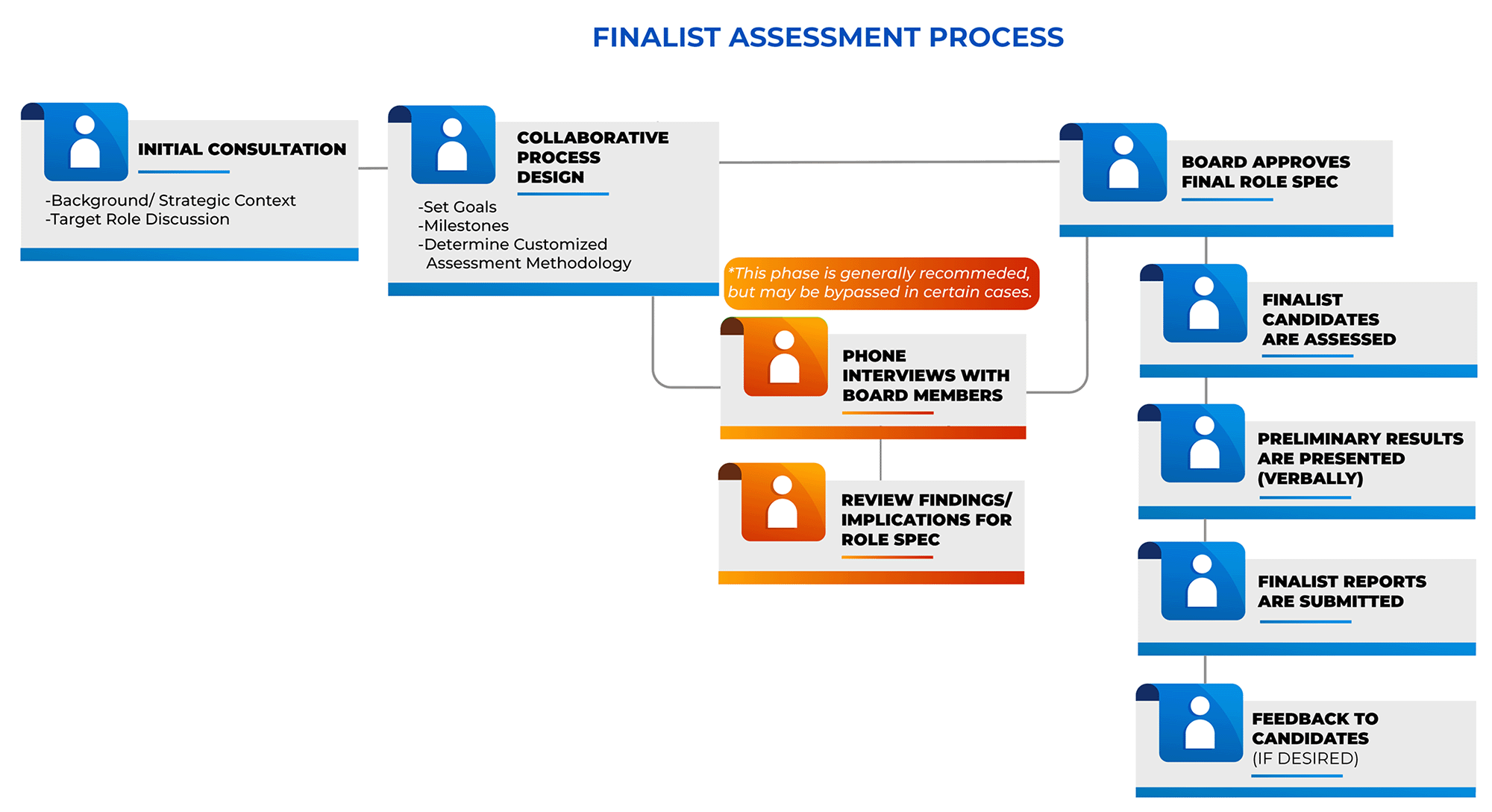
An example of a typical finalist assessment is illustrated below…
2) Developmental
Quite simply, this is a non-evaluative, confidential assessment which is centered upon the development of the leader. These assessments are not directly linked to a particular promotion, selection decision, or performance evaluation. As a consequence, the participant is more apt to be forthright in regards to their own ambitions, aspirations, and potential areas of improvement.
In most organizations, assessment results are shared with participants and management (their direct supervisors). However, some organizations opt to provide the feedback to the executive only which ensures that the process is based solely on development. Still, other organizations opt for a “hybrid process” such that some feedback is for the participant only while certain parts (e.g. top-line summary) of the feedback is provided to management, also . In hybrid processes, it is clearly defined as to which information will be provided to the assessment participant and which to management, also.
An example of a typical developmental assessment process is shown in the visual below…

3) High Potential Identification
Many forward-thinking organizations have long since realized dividends from this type of assessment. In identifying high potential talent, it is incumbent upon top leadership to ensure that focused, proactive efforts are in place to do so. The goal is to identify which early- to mid-career professionals might have the highest probability of succeeding within their current organization. (This is critical to point out such that a professional may struggle in a certain organizational culture, but thrive in another). The process is similar to that of a Developmental Assessment, but it is evaluative and confidentiality is not guaranteed.